Rebounding from a Capital Winter: The Financing Chain Is Being Rebuilt
Following the monetary tightening and geopolitical volatility of 2023–2024, the U.S. capital markets showed clear signs of recovery in early 2025, and Chinese companies moved quickly to seize the window of opportunity. According to Dealogic, Chinese issuers raised $690 million via U.S. IPOs in H1 2025 are already nearing the full-year total of 2024.
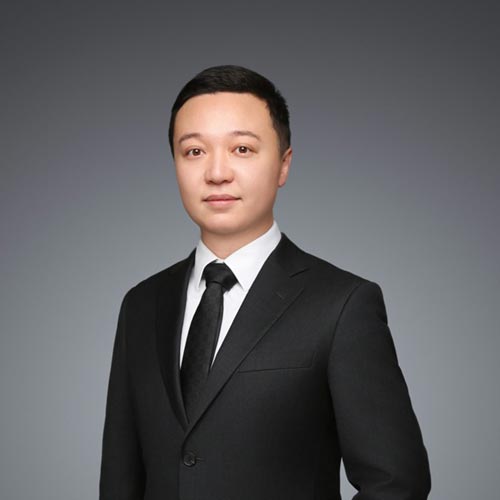
David Feng, Vice President of ARC Group, observed:
“What we’re seeing is not just a cyclical rebound, but the emergence of a new capital chain. IPO is merely the beginning; what’s more important is how a company sustains liquidity through the full capital cycle. The first half of 2025 marks a structural opportunity.”
The dynamics of capital formation are shifting rapidly. IPOs under $50 million now dominate the landscape, with outbound-oriented sectors like new energy, intelligent manufacturing, and cross-border e-commerce leading in proceeds. At the same time, a surge of secondary offerings—via PIPEs, RDOs, Reg S placements and more has kicked off what many are calling the real “resupply battle.”
Accelerated Listing Pace: Small Offerings Become the Norm
Over 40 Chinese and Hong Kong-based companies filed for U.S. IPOs with the SEC in H1 2025. Q1 saw 21 successful listings, while Q2 gained additional traction fueled by growth in smart vehicles, SaaS platforms, and niche consumer brands.
These frequent, smaller offerings reflect both continued U.S. investor tolerance for high-growth, pre-profit companies and a deliberate strategy by issuers to manage dilution and phase capital raising.
David Feng noted:
“U.S. investors are still open to growth stories, especially those with real revenue and a global mindset. Dual-market strategies between Hong Kong and the U.S. are becoming the new norm for digital economy and advanced manufacturing firms. Everyone is chasing U.S. dollar valuations and global liquidity.”
Regulatory Pressures Mount: Nasdaq’s New Rule Resets the Bar
In April 2025, Nasdaq’s new listing rule took effect, mandating a minimum USD 15 million in public float raised via IPO proceeds. This essentially phased out the earlier model of combining secondary share registration with small capital raises.
The new standard pushed companies to secure cornerstone investors earlier, design their capital structures ahead of time, and rethink listing strategies between Nasdaq and NYSE.
“The new rule forces smaller issuers to prepare earlier and more comprehensively,” said David Feng, “From an investment banking perspective, it’s a positive – it filters out underprepared companies and gives full-service platforms like ARC Group an edge in offering end-to-end execution.”
The Real Battle Begins Post-IPO: USD 1.3 Billion Raised in H1 Secondary Financings
IPO may be the headline event, but the capital resupply war is being fought in the secondary market. In Q2 alone, Chinese issuers completed 21 secondary transactions, raising USD 1.04 billion, up from USD 270 million in Q1-a total of USD 1.31 billion in H1.
The largest transaction in the second quarter came from established data center operator GDS Holdings, which raised approximately $627 million through a combination of ADS placement and convertible notes. Following closely was Kingsoft Cloud (KC), which secured around $290 million via a public offering and a Reg S private placement.
On the Hong Kong issuer side, Plutus Financial Group (PLUT), Solowin Holdings (SWIN), and Primega Group (ZDAI) raised between $2.09 million and $11.4 million, respectively, through supplemental offerings during the quarter. Structurally, Registered Direct Offerings (RDOs), Reg S placements, and PIPEs continued to gain market share, reflecting a shift toward more flexible financing tools as issuers respond to volatile market conditions.
As capital markets mature and financing structures become increasingly transparent, issuers are becoming more deliberate in weighing trade-offs across funding cost, dilution impact, timing, and liquidity needs. Some companies are turning to ELOCs, PIPEs, or ATM programs to improve execution efficiency and reduce external uncertainty, while others still prefer traditional follow-on offerings to broaden their shareholder base and send a clear signal to the market.
Looking ahead, the diversification of financing tools—combined with more sophisticated financial decision-making—will sustain secondary market activity. For investment banks, this raises the bar for structuring and strategy customization capabilities.
“We’re now seeing clients map out their second financing rounds the day they list,” Feng observed, “It’s no longer about who gets listed first, but who can stay funded and move fast.”
H2 Outlook: Opportunities Amid Divergence
As the second half of 2025 unfolds, expectations of interest rate cuts combined with improving U.S. dollar liquidity continue to create a relatively favorable environment for Chinese issuers across both primary and secondary capital markets.
According to Dealogic, by mid-July, 45 Chinese and Hong Kong-based companies had filed for U.S. IPOs with the SEC, with approximately 60% of them targeting proceeds below USD 50 million. This underscores the continued dominance of small-cap, high-growth listings.
With large-cap offerings largely absent from the pipeline, market attention has increasingly shifted toward enabling smaller issuers to successfully navigate the pricing and listing process under a more stringent regulatory framework. The return of larger Chinese issuers to the U.S. markets remains contingent upon further progress in cross-border regulatory coordination and improvements in broader macroeconomic conditions.
Nonetheless, regulatory compliance and geopolitical uncertainty remain ever-present overhang. Only those companies that proactively secure cornerstone investors, prepare multiple listing options across exchanges, and fully meet disclosure and ESG expectations prior to launch will be well-positioned to capture upcoming funding windows.
ARC Group: A One-Stop Execution Platform
In a more complex financing environment, ARC Group has established itself as a leading player in cross-border capital execution through its U.S.-licensed broker-dealer, ARC Group Securities. The firm delivers a seamless platform for IPOs, secondaries, and strategic advisory.
In 2024 alone, ARC handled over USD 12.3 billion in transaction volume, spanning sectors like renewables, biotech, advanced manufacturing, and digital consumption.
Key advantages include:
- 24/7 cross-timezone coverage, connecting clients with exchanges, regulators, and investors globally.
- Flexible financing structures across IPO, PIPE, RDO, ATM, ELOC, and M&A advisory.
- Post-IPO capital strategy integration, from investor relations to follow-on financing and long-term capital planning.
David Feng summarizes:
“ARC isn’t just a bookrunner—we’re a capital strategy partner. Whether it’s IPO, PIPE, or RDO, we integrate it all into a unified roadmap. That’s the value of one-stop execution. Our expertise isn’t just in listing—it’s in planning the financing path for the first year and the years beyond.”
Rethinking Investment Banking in the Era of Supplementary Capital
H1 2025 marked the strong comeback of Chinese issuers in U.S. capital markets. While IPOs gained momentum, the real action moved to the secondary markets where financing volumes surged and fundraising models evolved.
As liquidity returns and listing standards tighten, ARC Group is redefining the role of the investment bank—not merely a gateway, but a long-term capital partner from IPO through multiple financing rounds and into sustainable value creation.
David Feng concludes:
“This is no longer a market of abundant capital, it’s a market of higher standards. The real winners will be companies that prepare early, adapt to new rules, and leverage the integrated platforms of global investment banks to execute across both listing and resupply phases.”
Author:
David Feng
Vice President
Author:
June Xie
Assistant MKT Manager
References: